
Swift County Projected Versus Actual Release
A projected date is a working calculation. It marks when confinement is expected to end under the facts currently in the record. An actual release date records what happened after the jail or prison completed its checks. Those dates can differ because sentence credit changes, discipline, a court order, or another agency’s hold can alter the outcome.
The custody type comes first. A person awaiting trial at Swift County Jail has no sentence-based release date to calculate. Bond may be posted, a judge may issue an order, the case may resolve, or another authority may take custody. A person serving a local sentence may have a jail computation. Someone committed to the Commissioner of Corrections follows the MNDOC sentence structure and public Locator fields.
Release from prison also differs from discharge. A state prisoner may leave confinement and begin supervised release while the sentence remains active. Discharge is the end of correctional jurisdiction. The MNDOC record separates its anticipated prison-release date from the later expiration date for this reason.
Find a Swift County Release Date
Start by identifying the present custodian. The Swift County In Custody List shows people held by the county as of its timestamp. It is not a release calendar. The MNDOC Locator covers adults committed to the Commissioner who are incarcerated or remain on community supervision. A county booking alone does not create an MNDOC record.
- Check the Swift County roster to see whether the person is held locally.
- If held pretrial, use the court file and jail for the controlling order or bond status.
- If serving a county sentence, request the jail’s calculation and ask about other holds.
- If in state prison, search the MNDOC Locator by name or full six-digit offender ID.
- Open the correct detail record and read Current Status first.
- For an incarcerated record, locate “Anticipated Release Date” and “Expiration Date.”
- Confirm the date near release because the working calculation can change.
The full Swift County released inmates search can help when the person has left a roster or moved between systems. For a local sentence, the Sheriff and Swift County District Court are the direct sources. For a state sentence that no longer appears because jurisdiction ended, MNDOC Central Records can supply the public or redactable record.
Note: Absence from Swift County’s current roster does not prove community release, because a transfer may remove the row.
Swift County Anticipated Release Date
MNDOC uses the exact label Anticipated Release Date for an incarcerated person’s expected move out of prison confinement. “Projected release date” is the common search phrase, but it should lead to that official field. The detail record also displays Current Status, facility, sentence date, court file numbers, offense information, and Expiration Date.
The official MNDOC incarcerated example shows where the Anticipated Release Date appears in the public detail view.
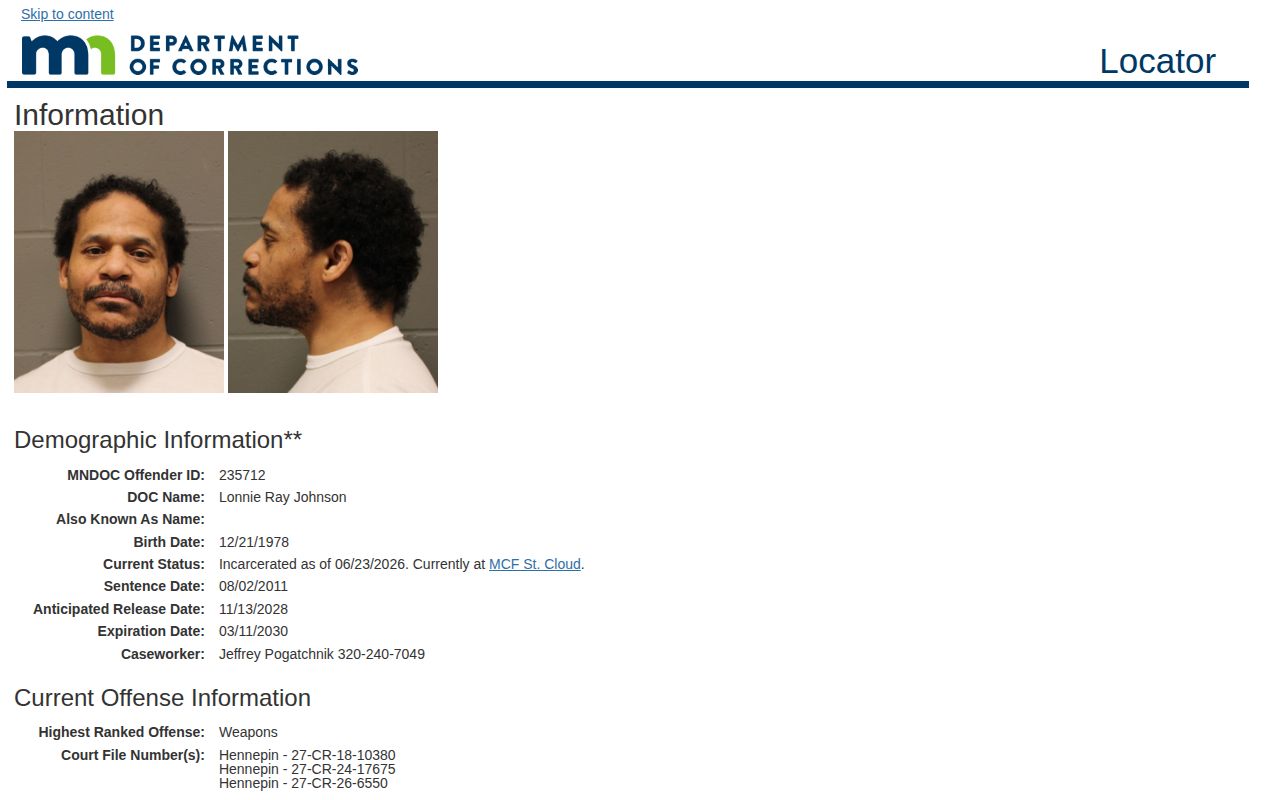
The image also shows why status must be read with the dates. Anticipated Release Date is not the same field as Expiration Date, and neither should be copied without checking the correct identity and current status.
| MNDOC field | Meaning |
|---|---|
| Current Status | Whether the person is incarcerated or in another MNDOC status. |
| Anticipated Release Date | The expected end of prison confinement under the current calculation. |
| Expiration Date | The displayed end of sentence or jurisdiction, often after prison release. |
| Under Supervision as of | A status showing prison confinement ended while supervision continued. |
Swift Release Dates Are Not 85%
Minnesota is not an 85-percent state under its standard post-1993 felony framework. For qualifying fixed executed felony sentences tied to offenses on or after August 1, 1993, Minn. Stat. §244.101 divides the sentence into a minimum prison term of two-thirds and a maximum supervised-release term of one-third. Section 244.05 then governs the supervised-release portion, subject to discipline and other rules.
For a simple example only, a 60-month fixed executed sentence ordinarily starts with 40 months of imprisonment and 20 months of supervised release. This is not a calculation for a named person. Jail credit, consecutive or concurrent sentences, special offense laws, disciplinary confinement, and conditional-release terms can change the real dates.
The official two-part sentence statute shows the prison and supervised-release structure used for the standard rule.
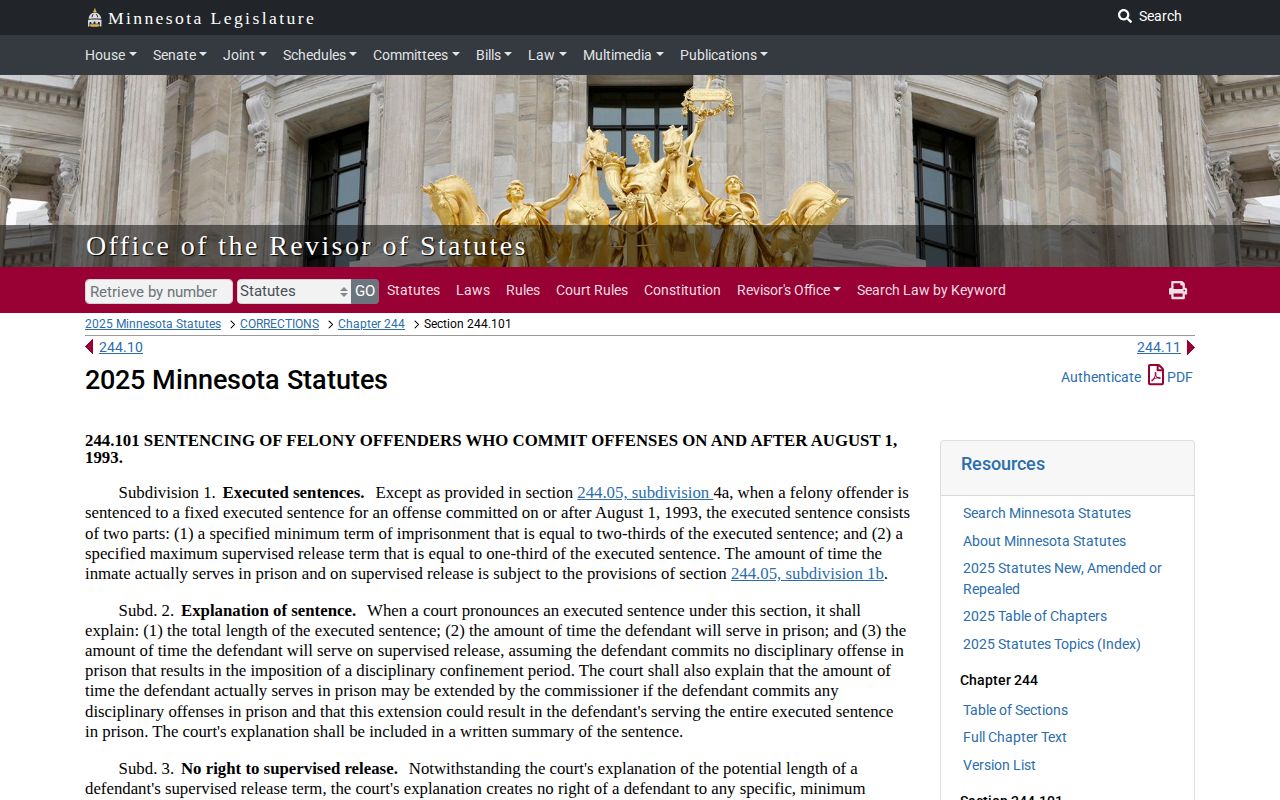
This state-prison structure must not be applied to a pretrial Swift County detainee or substituted for the county jail’s own calculation under a different statute.
Note: Two-thirds marks the standard prison portion in this framework, while the remaining one-third is supervised release, not erased time.
MRRA Changes Swift Release Calculations
The Minnesota Rehabilitation and Reinvestment Act created individualized rehabilitation plans, earned incentive release credit, and earned compliance credit. Earned incentive credit can affect the term of imprisonment, but it does not lengthen the supervised-release term or reduce the total sentence. The statutory maximum is not an automatic award.
The law permits earned incentive release credit up to 17 percent of the total executed sentence for eligible people and does not allow prison time to fall below one-half of that sentence. Credits depend on eligibility and conduct. They may be revoked after facility rule violations or criminal acts. Life sentences, some indeterminate sentences, and people under older good-time rules fall within listed exclusions.
The MNDOC MRRA implementation page describes a phased rollout that began in early 2026 and continues into 2027. County-based rollout also affects earned compliance credit and supervision abatement. Check the current phase instead of subtracting 17 percent from a sentence.
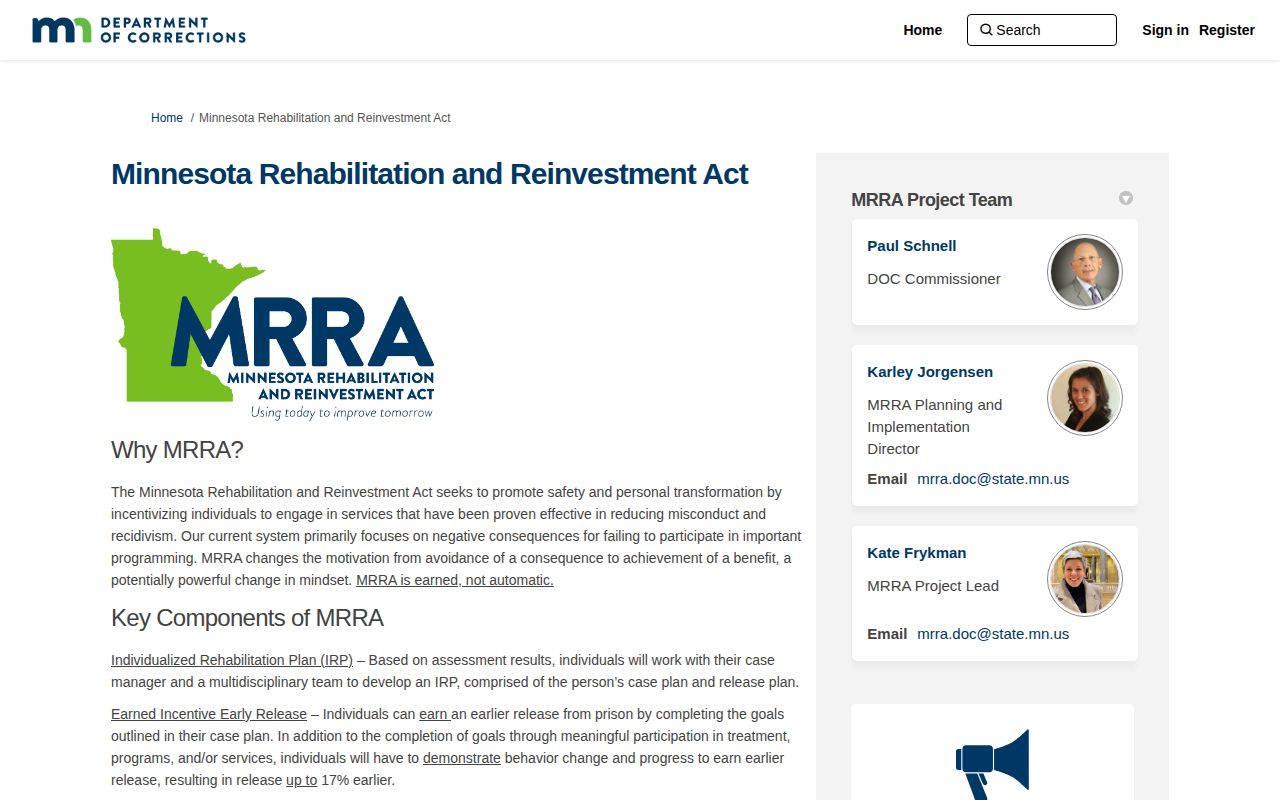
The implementation source is time-sensitive. A person’s MNDOC record and Central Records response remain more reliable than a private estimate based on the maximum possible credit.
Swift County Jail Good Time
County-jail good time comes from a different law. Minn. Stat. §643.29 applies to a person sentenced for ten days or more to a county jail, workhouse, or correctional work farm, whether the term is executed or imposed as a condition of probation. It provides one day of sentence reduction for each two days served during compliant conduct and diligent required labor.
Jail authorities may take away earned reduction under a prisoner discipline plan and may restore it after considering mitigation. The rule is not a release promise. A pretrial detainee cannot create a set release date by applying §643.29, and a bond decision, court order, warrant, detainer, or other hold may control custody.
The county-jail sentence reduction statute provides the legal terms that guide the local calculation.
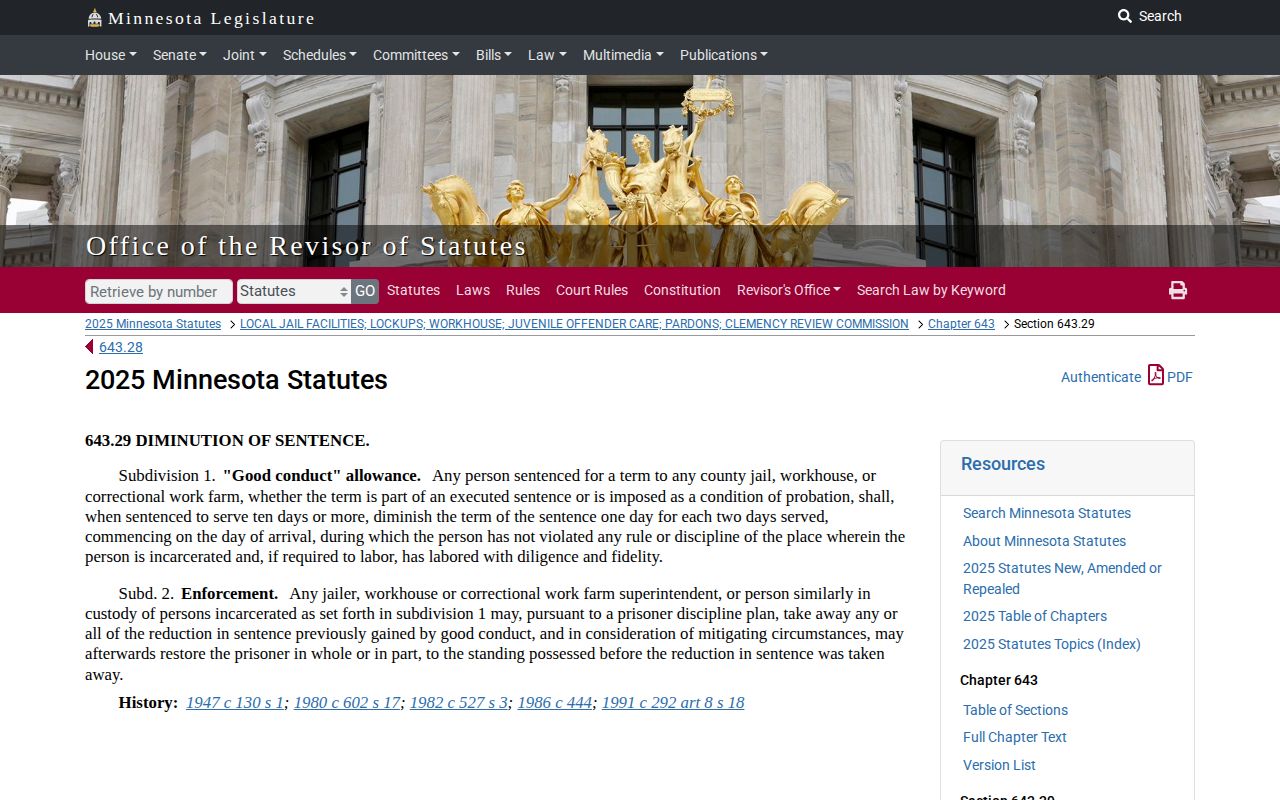
Ask Swift County Jail for the working calculation on a named local sentence. Keep that answer separate from an MNDOC Anticipated Release Date.
Swift Release Dates Near Weekends
Minnesota’s weekend and holiday rule is narrow and depends on the offense date. Under §244.05, subd. 1a, certain crimes committed before August 1, 1992, move a scheduled Friday, Saturday, Sunday, or holiday supervised-release date to the last prior day that is not one of those days.
For crimes committed on or after August 1, 1992, supervised release begins on the first day after the scheduled date that is not Friday, Saturday, Sunday, or a holiday. The direction therefore changes at the statutory date line. It is wrong to state one simple rule for all Minnesota sentences.
The supervised-release statute contains the offense-date distinction and the broader release framework.
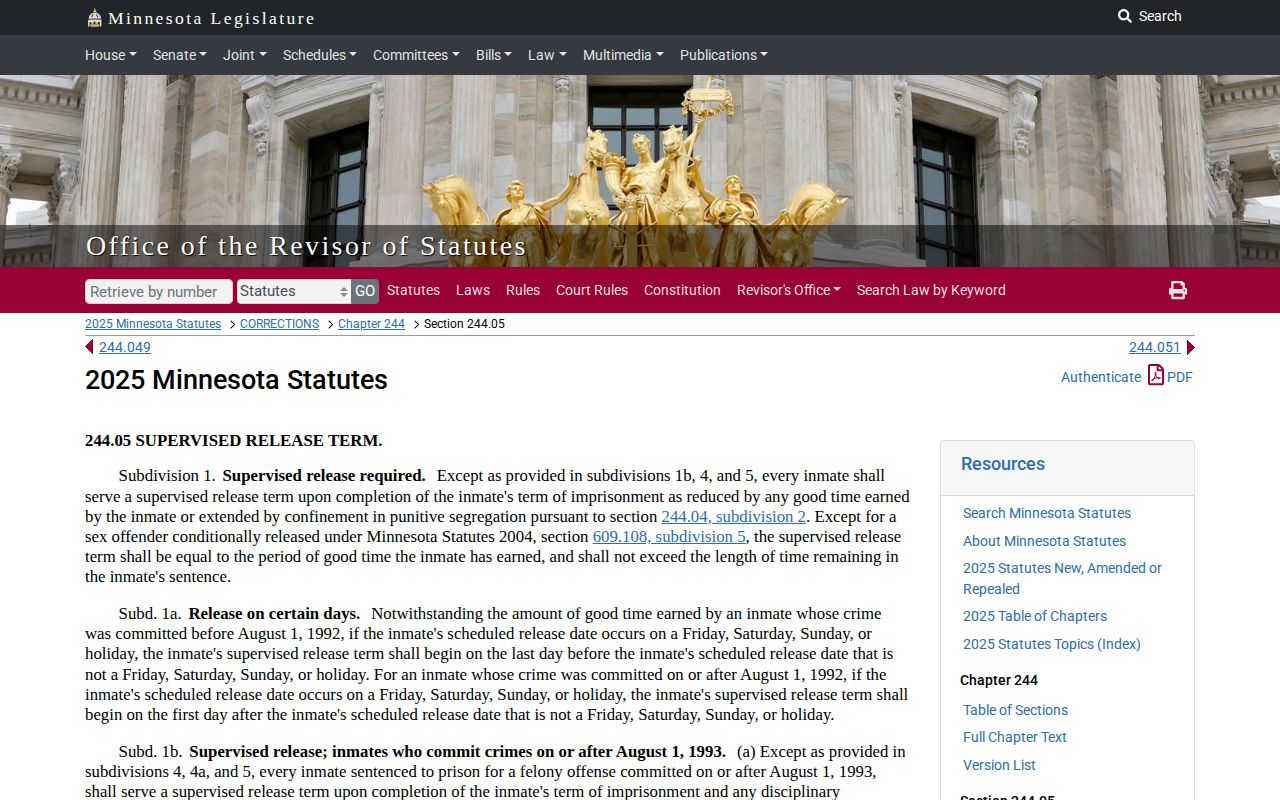
This is a state-prison supervised-release rule. It does not establish a daily Swift County Jail release schedule, and no official local release-hour promise was found.
Note: The weekend rule changes direction by offense date and must never be turned into a county-jail timing claim.
Why Swift Release Dates Change
A date may move even when the public record once showed a firm-looking day. The controlling agency must apply sentence credit, court changes, discipline, and any other custody authority. Some factors change the prison computation. Others do not change the sentence date but can prevent a return to the community.
| Factor | Possible effect |
|---|---|
| Discipline | Loss of credit or added disciplinary confinement can delay release. |
| Jail or prison credit | Corrected time credit can change the calculation. |
| Court amendment | A changed sentence or order may alter the governing date. |
| Consecutive sentences | Terms served in sequence produce a different calculation than concurrent terms. |
| Special offense rule | Conditional-release or life-sentence provisions may replace the standard formula. |
| Warrant or detainer | Another authority may take custody when the current confinement ends. |
| Earned incentive credit | Eligible, earned credit may reduce prison time during the phased program. |
A detainer is a notice or authority tied to another agency’s custody interest. It may mean the person leaves one facility but does not enter the community. Parole applies mainly to Minnesota’s limited life or indeterminate-sentence populations. Most ordinary post-1993 fixed sentences move through supervised release rather than a case-by-case parole grant.
Confirm a Swift County Release Date
For Swift County Jail, call 320-843-3133 and use the Swift County Sheriff release or transfer record after the event. The Swift County District Court can clarify a sentence or order at 320-843-2744. For an MNDOC sentence, use the Locator first and contact Central Records at 651-361-7330 or CO-Records.DOC@state.mn.us when the record is missing, fully discharged, or needs a formal explanation.
A notice can complement the date check. County jail custody changes use VINE only when the live selector confirms Swift County participation. MNDOC custody and supervision changes use Minnesota Haven. The Swift County VINELink release check explains the split and the record-specific registration steps.
When requesting an answer, include the right identifier. Use a Swift booking number for local custody and the full six-digit offender ID for MNDOC. Ask whether the stated date ends confinement, begins supervision, or ends the full sentence. That wording prevents an anticipated prison release from being mistaken for final discharge.
- Anticipated release
- MNDOC’s official field for the expected end of current prison confinement.
- Supervised release
- The community portion of an active executed sentence after prison.
- Expiration
- The displayed end of sentence or MNDOC jurisdiction.
- Pretrial detainee
- A person held before final case disposition, with no sentence-based release date.
- Detainer
- An authority or request that may lead to custody elsewhere.
The final check should ask two different questions: did confinement at this facility end, and did the person return to the community? Only the responsible agencies can resolve both with current records.